If you secretly want a wildly alive, climate‑smart garden but don’t want to spend every weekend weeding, watering and fussing, you are not alone. The good news: a resilient biosphere garden actually prefers steady, low‑input care over constant intervention.
This post gathers practical “lazy gardener” tactics that work with soil life, water, plants and wildlife so your garden gradually starts to look after itself. Less perfection, more ecosystem.
What “Lazy” Really Means in a Biosphere Garden
Lazy gardening is not neglect. It is choosing a few high‑impact habits that let natural processes do most of the work for you. Instead of fighting your garden, you are setting up the conditions for:
- Healthy soil that feeds plants and stores water and carbon
- Layered planting that shades the ground and suppresses weeds
- Built‑in biodiversity so pests stay in balance
- Gentle water cycles that hold rain where it falls
Think of yourself less as a controller and more as a quiet choreographer, placing a few key moves and then letting the garden improvise.
Start With Soil: The One Job That Makes All Others Easier
If you only have energy for one regular task, make it feeding and protecting your soil. When soil is alive and covered, plants root more deeply, need less watering and resist stress better.
1. Always Be Mulching (Lightly)
Mulch is the lazy gardener’s best friend. It mimics the forest floor: never bare, always softly padded with fallen material. A thin, loose layer of organic mulch can:
- Reduce evaporation, keeping soil moist for longer
- Soften the impact of heavy rain, so water sinks in instead of running off
- Feed soil organisms as it slowly breaks down
- Shade out many annual weeds
Simple ways to keep a mulch habit low‑effort:
- Use what you already have. Shredded autumn leaves, half‑finished compost, pulled weeds that have not set seed, prunings chopped with secateurs – they all count.
- Top up little and often. Each time you walk through the garden with a trug, drop a small handful of mulch wherever you can see bare soil.
- Mulch in rings. Around perennials and shrubs, keep a small gap around the stem, then a ring of mulch beyond that. This protects the soil but avoids rotting plant bases.
Over time, you will notice the soil becoming darker, crumbly and easier to work – a sign that your underground biodiversity is thriving.
2. Stop Digging (Your Soil Life Will Thank You)
Digging is hard work for you and for the soil community. Turning soil upside down breaks fungal networks and exposes microbes to light and air, which can release stored carbon and moisture.
A no‑dig or low‑dig approach looks like this:
- When you want a new bed, lay cardboard over the grass or weeds, soak it, then layer compost or well‑rotted organic matter on top. Plant into that.
- For planting, open a small slit or hole just big enough for the roots. Slide the plant in, firm gently, then mulch.
- Leave old roots in place when you remove annuals. Cut the stems at soil level and let the roots decompose underground, adding organic matter and channels for air and water.
This saves your back, locks more carbon in the soil and helps create a stable home for fungi and microbes – the real engine of a biosphere garden.
Plant Once, Harvest for Years: Perennials, Groundcovers and Self‑Seeders
Hand‑watering trays of seedlings and filling borders with annuals can be joyful, but it is also time‑intensive. If your energy or water are limited, shift the balance toward plants that come back on their own.
3. Build a Perennial “Backbone”
Perennials and small shrubs are the structural bones of a low‑input garden. Deeply rooted, they can reach moisture further down and keep soil covered almost year‑round.
Look for plants that:
- Suit your light and soil without constant pampering
- Flower or fruit over long seasons for pollinators and birds
- Have foliage that covers the ground densely
Once they are established, your main jobs are simply an annual cut‑back and a top‑up of mulch. Everything in between is mostly watching, listening and small tweaks.
4. Let Groundcovers Do the Weeding
Nature dislikes bare soil, so if you leave gaps, something will move in. The lazy gardener’s trick is to make sure that “something” is a plant you like.
Low, spreading groundcovers can:
- Shade out many weed seedlings
- Cool the soil, reducing water loss
- Protect the feet of taller plants from sun and heavy rain
Plant them like a living mulch beneath shrubs, along paths or under fruit bushes. Over time they knit together into a soft, biodiverse carpet that you barely have to touch.
5. Befriend the Gentle Self‑Seeders
Self‑seeding annuals and short‑lived perennials can refill spaces without you sowing every year. The key is to choose species that are easy to edit with one hand and a mug of tea.
To work with self‑seeders, not against them:
- Learn their baby faces. Spend a little time noticing what the seedlings look like so you can distinguish them from weeds.
- Thin instead of clearing. Where they are too dense, gently pull a few and leave some to flower.
- Deadhead where you want less. If you are worried about over‑spreading, cut seed heads on time in those areas.
With a few passes a year, you get a constantly shifting, wildlife‑friendly tapestry without trays, labels or strict rows.
Water Once, Benefit Twice: Slow, Store and Shade
In a climate‑resilient garden, every drop of water does more than one job: it hydrates plants, cools the air, moves nutrients and buffers temperature swings. The lazier your watering routine, the smarter your system needs to be.
6. Water Deeply, Less Often
Frequent, shallow watering encourages roots to stay near the surface, where they dry out quickly. A more resilient pattern is:
- Water new plants generously but infrequently, so the moisture sinks deep
- Check soil with your fingers before watering again – cool and slightly damp is usually enough
- Combine watering with mulching: water first, then apply mulch to trap it
This trains plants to root more deeply and ride out dry spells with less help from you.
7. Use Plants for Shade and Shelter
Instead of relying on hoses and sprinklers, use plant choices and layout to create a cooler microclimate:
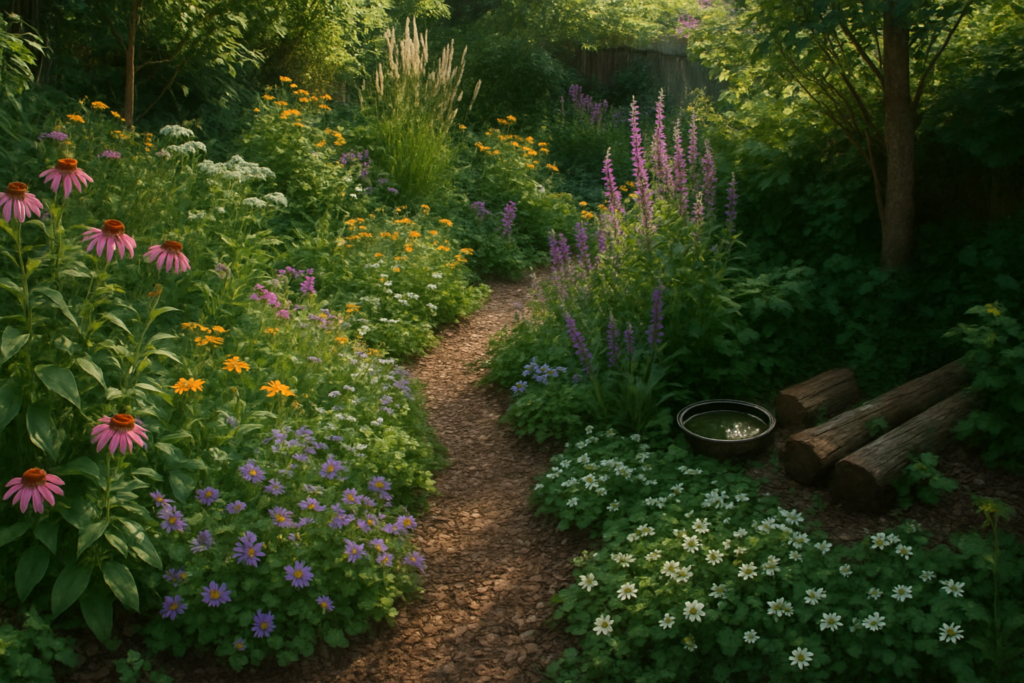
- Layer heights. Taller, airy plants can cast dappled shade on more delicate ones beneath.
- Plant windbreaks. Hedges or dense borders along exposed edges slow down drying winds.
- Fill “heat traps”. Paved areas and walls can reflect heat. Soften them with climbers, large pots or narrow beds to buffer temperature swings.
Once established, these planting patterns quietly regulate extremes with very little ongoing work.
Invite the Helpers: Wildlife as Your Quiet Workforce
In a biosphere garden, you are not gardening alone. A huge cast of insects, birds, amphibians and soil organisms are ready to help – if you offer them food, water and shelter.
8. Swap Pest Control for Habitat Creation
Instead of reaching for sprays when you see a pest, ask: “Which predator is missing?” Building small habitats is often easier than chasing every outbreak by hand.
Simple, low‑effort habitats include:
- A shallow water dish with stones for bees and small creatures to land on
- A twig and log pile in a quiet corner for beetles, centipedes and other decomposers
- Dense shrubs that offer nesting nooks for birds, which then patrol for caterpillars
- Undisturbed leaf litter under trees and hedges where ground‑dwelling predators can hide
By supplying these basics, you gradually shift from constant firefighting to a more balanced, self‑regulating ecosystem.
9. Rethink “Mess” as Energy in Storage
A very tidy garden is often a hungry, hard‑work garden. All that swept‑away material has to be replaced somehow. A lazy biosphere garden keeps resources cycling on site.
Try slowly changing your idea of mess:
- A corner of long grass becomes a mini‑meadow for insects.
- A pile of leaves under a hedge is a winter blanket for soil life.
- Sturdy seed heads left standing hold food for birds and places for beneficial insects to overwinter.
Every time you leave something in place – a stem, a leaf, a fallen petal – you are saving yourself effort and feeding the system that supports your garden.
Set Your Garden on a Gentler Rhythm
Becoming a “lazy” biosphere gardener is mostly about changing rhythms and expectations. Instead of weekend blitzes, think small, regular touches:
- A few handfuls of mulch on a walk to the compost bin
- Ten minutes thinning self‑seeders while your tea cools
- A quick check of the soil with your fingers before you water
- Letting one more corner go a little wilder this year than last
Over seasons, these light‑touch habits build real resilience. Your soil holds more water, your plants ride out extremes more calmly, and your garden hums with life – even when you are doing something else entirely.
That is the quiet promise of a biosphere garden: less striving, more listening, and a living landscape that meets you where you are.