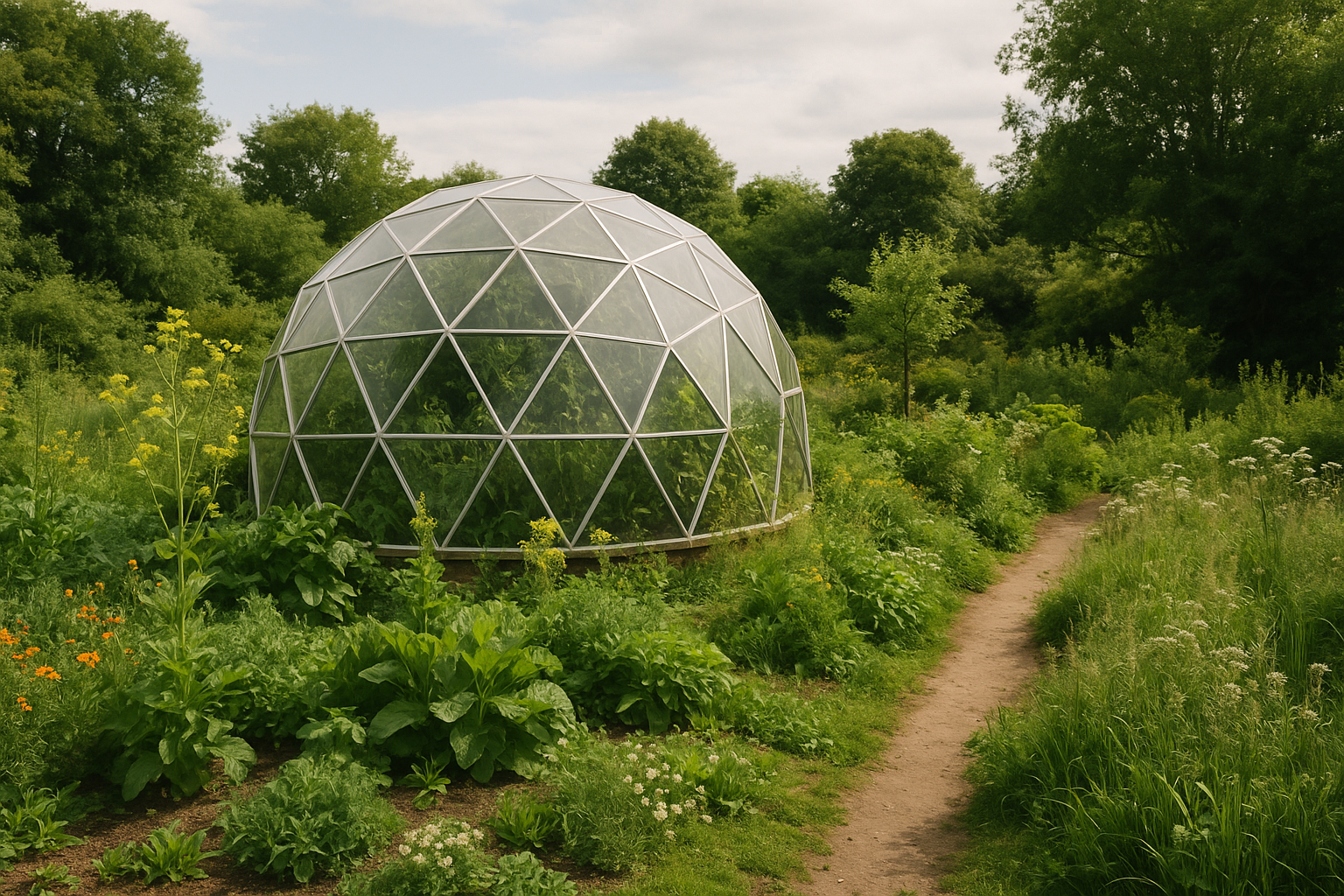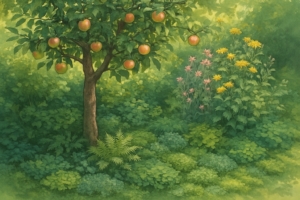
In a healthy wild landscape, plants rarely grow alone. They weave together in small communities where roots, fungi, insects and microbes are constantly trading resources. In biosphere gardening, we can copy this pattern by planting guilds – simple, intentional plant partnerships that help each other survive heat, drought, pests and poor soil.
You don’t need a huge plot or advanced design software to start. A guild can be as small as three plants in a single border. What matters is choosing companions that share the work of living, so you do less of it.
What Is a Plant Guild, Really?
A plant guild is a small, diverse group of plants that work together around a focal species, usually a shrub or small tree. Each companion plays one or more roles – shading soil, feeding pollinators, fixing nitrogen, breaking up compaction, or providing mulch.
Instead of one plant doing everything, each plant does what it is best at. Over time, these roles create a mini biosphere that is:
- More resilient to extreme weather
- More attractive to pollinators, birds and beneficial insects
- Less dependent on fertilisers, pesticides and constant watering
Native plants are especially powerful in guilds because they are already in relationship with your local climate, soils and wildlife. When you group them thoughtfully, you reconnect pieces of the original ecosystem that suburban gardens often lose.
The 6 Key Roles in a Native Plant Guild
Every garden is different, but most successful guilds include a mix of these six roles. One plant can play several roles at once, so you don’t need six separate species – three to five well-chosen plants can cover everything.
1. The Anchor: Structure and Shade
The anchor is usually a small tree, large shrub or strong clump-forming perennial. It gives the guild height, shade and a visual focal point.
- What it does: stabilises the soil with deeper roots, casts cooling shade, offers nesting or perching spots for wildlife, and often provides blossoms or berries.
- What to look for: long-lived, well-adapted to your region, not overly thirsty, and sized correctly for the space you actually have.
In a tiny garden, the anchor might simply be your favourite native shrub, with a circle of companions at its feet.
2. The Groundcover: Living Mulch
Groundcovers are low plants that knit the soil surface together. They are your first line of defence against bare, baking ground.
- What they do: shade and cool the soil, reduce evaporation, protect soil life, and block many weed seedlings.
- What to look for: spreading habit without smothering neighbours, tough enough to handle local conditions, and ideally flowering for pollinators.
Think of groundcovers as your living mulch layer, backed up by actual mulch until they fill in.
3. The Nutrient Helper: Feed the Soil, Not the Bin
In wild ecosystems, nobody brings in fertiliser. Nutrients cycle through deep-rooted plants, nitrogen fixers, and generous self-mulchers.
- Deep-rooted plants pull minerals up from lower soil layers and release them near the surface when leaves die back.
- Nitrogen-fixing plants form a partnership with bacteria on their roots, turning atmospheric nitrogen into plant food.
- Self-mulchers drop lots of leaves or stems, creating on-the-spot compost.
Including at least one nutrient helper means your guild gradually improves its own soil over time.
4. The Insectary: Friends With Wings
Many garden problems – aphids, caterpillars, mites – are best handled by predators like ladybirds, hoverflies and parasitic wasps. To host them, you need flowers rich in nectar and pollen.
- What they do: attract and feed beneficial insects, support pollinators, and increase overall biodiversity.
- What to look for: small, simple flowers (easy to access), long flowering season, and staggered bloom times through the year.
Often, insectary plants are also beautiful, giving you colour and life while quietly guarding your crops and ornamentals.
5. The Root Architect: Loosen and Hold
If your soil is compacted, heavy, or prone to erosion, you want plants whose main job is root engineering.
- What they do: break up hard soil, create channels for water and air, hold slopes and edges together, and give microbes more habitat.
- What to look for: fibrous or taproot systems, tolerance of your current soil (even if it’s poor), and low maintenance.
Over a few seasons, root architects quietly turn stubborn ground into a more crumbly, living soil.
6. The Human Delight: Beauty and Use
Every guild should clearly serve you as well as the biosphere. That might mean fragrance, cutting flowers, herbs, fruit, or simply a view that makes you want to step outside.
- What they do: keep you emotionally invested in the garden, encourage regular observation, and provide food, tea ingredients or cuttings.
- What to look for: plants you genuinely love and will care about enough to notice early stress or imbalance.
When your garden gives back in these human ways, you naturally give more attention to the whole living system.
Designing a Simple Native Guild in a Small Space
You can build guilds in borders, under existing trees, in raised beds, or even in large containers. The steps are the same.
- Read your site. Spend a few days noticing sun, shade, wind, and where water collects or runs off. Note where soil stays damp and where it bakes dry.
- Choose your anchor. Pick one native shrub, small tree or clump-forming perennial that fits your space and light. This is the plant you most want to thrive.
- Add 2–4 companions covering key roles. Start with a groundcover, an insectary flower, and either a nutrient helper or root architect. One plant can fill more than one role.
- Think in layers, not rows. Place taller plants to the back or centre, mid-height plants in front or around them, and groundcovers at the edges and in any remaining gaps.
- Mulch generously. After planting, add a layer of organic mulch around your plants, keeping it away from stems. This protects soil life while your living mulch layer establishes.
- Water like a community. In the first season, water deeply and less often, so roots grow down rather than staying shallow. Let the whole guild dry a bit between waterings.
As the guild matures, you will notice less bare soil, fewer weeds, cooler ground and more wildlife activity. That is your mini biosphere knitting itself together.
Three Example Guilds You Can Adapt
Every region has its own native flora, so treat these as patterns rather than prescriptions. Swap in local species with similar habits and roles.
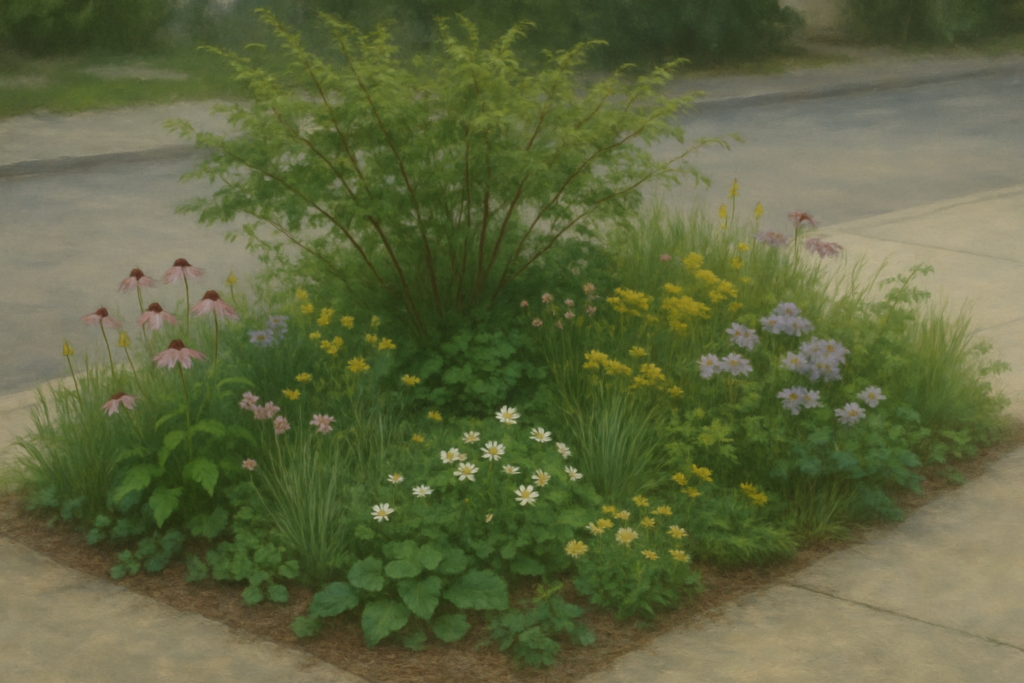
1. The Dry Corner Pollinator Guild
For a sunny, dry strip or front garden that bakes in summer.
- Anchor: a sun-loving native shrub or small tree adapted to dry soils.
- Groundcover: a drought-tolerant native creeping plant that flowers.
- Nutrient helper: a deep-rooted perennial that dies back annually, feeding the soil.
- Insectary: a native daisy-type flower or umbel that blooms for a long season.
- Root architect: a bunch-forming native grass that holds the soil.
Why it works: the shrub casts light shade, the grass and groundcover shield the soil, and the flowers keep pollinators visiting even in dry spells, reducing your watering needs.
2. The Shady Path Edge Guild
For a part-shade area under existing trees or along a north-facing fence.
- Anchor: a shade-tolerant native shrub or taller woodland perennial.
- Groundcover: a low, spreading native that thrives in dappled light.
- Nutrient helper: a plant known to tolerate poorer, tree-rooted soils while adding organic matter.
- Insectary: a native woodland flower with simple blooms to feed early or late-season pollinators.
- Human delight: something with scent or striking foliage to brighten the shade.
Why it works: the guild converts a previously “awkward” shady spot into a cool refuge rich in leaf litter, fungi and invertebrates, supporting your wider garden biosphere.
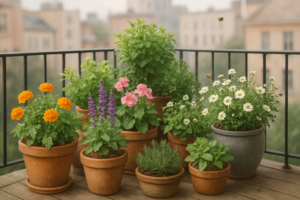
3. The Edible-Plus-Natives Patio Guild
For a small bed or large container near the house where you can combine native structure with a few favourite edibles.
- Anchor: a compact native shrub or small tree in a large container, or a structural perennial in a border.
- Groundcover: a native low plant mixed with a culinary herb that can handle similar conditions.
- Nutrient helper: a nitrogen-fixing plant or deep-rooted herb.
- Insectary: a long-blooming native flower that brings in pollinators for nearby fruit, veg and herbs.
- Human delight: your most-used kitchen herb or a few seasonal edible flowers.
Why it works: this guild keeps biodiversity right by your back door, where you will notice subtle changes in soil moisture, insect visitors and plant health from day to day.
Keeping Guilds Healthy Over Time
A guild is not a frozen design; it is a living relationship. Instead of constant replanting, focus on gentle guidance.
- Observe before you intervene. Watch how water moves, which plants compete, and where insects gather, through different seasons.
- Thin, don’t strip. If one plant dominates, remove a few clumps or stems rather than clearing it completely. Bare soil is the enemy of a stable biosphere.
- Feed the soil, not the plant. Add compost or leaf mould as a top dressing rather than applying strong fertilisers. This keeps the underground community balanced.
- Leave some mess. Hollow stems, seed heads and fallen leaves provide habitat and slow-release nutrients. Tidy selectively, where you need clear access or visibility.
Over the years, well-designed native guilds demand less from you while giving more back – deeper roots, richer soil, more birdsong and insect life, and a garden that feels alive in every season.
Start with one small guild this season, observe it closely, and let it teach you how plants want to live together. From there, you can extend the pattern until your whole garden feels like a connected, resilient biosphere.