If you only have a balcony, patio, roof or a tiny patch of hardstanding, you still have everything you need to grow a rich little biosphere. Container gardens can be more than collections of pretty pots – they can act as miniature habitats that store carbon, shelter wildlife and ride out heatwaves and downpours with surprising grace.
In this guide we’ll look at how to turn any small space into a climate‑smart container garden that behaves more like a living ecosystem than a row of isolated houseplants.
Think Biosphere, Not Single Pots
Most container gardens are designed plant by plant: a herb here, a rose there, maybe a tomato in summer. A biosphere garden flips that thinking. Instead, you ask:
- How can these pots support each other?
- Where will water move? Where will heat collect?
- What food, pollen and shelter can this space offer across the year?
Even on a balcony you can create layers and relationships just like in a larger ecological garden.
- Vertical layers: climbers against walls, medium shrubs or perennials in tubs, and low ground‑cover species spilling over the edges.
- Temporal layers: bulbs for early spring, flowers for summer pollinators, foliage and seedheads for autumn and winter.
- Functional layers: some plants feed you, some feed insects, some mostly protect soil and manage water.
When you think of the whole balcony or patio as one connected system, you naturally start making choices that support soil health, biodiversity and resilience.
Building Living Soil in a Pot
The main challenge for container gardens is that soil is cut off from natural processes. Rain can leach nutrients away, roots quickly fill the space, and temperature swings are more extreme. Instead of fighting this with constant fertiliser and re‑potting, you can slowly turn each container into a little soil ecosystem.
1. Start with the Right Base Mix
You don’t need an exact recipe, but you do want a mix that is:
- Free‑draining so roots don’t sit in water.
- Rich in organic matter to hold water and feed microbes.
- Low in peat if possible, for climate reasons and long‑term structure.
You can improve most shop‑bought composts by blending in:
- Finished garden compost (if you have it) for biology.
- Leaf mould for moisture‑holding and fungal life.
- Grit or sharp sand if drainage is poor.
Aim for a texture that is crumbly, holds together when squeezed but falls apart again with a tap.
2. Feed the Soil, Not Just the Plant
Liquid feeds give plants a quick hit but do little for the underlying soil web. A biosphere approach favours slow, steady nutrition from organic sources.
- Top‑dress with compost: Once or twice a year, add a few centimetres of mature compost on the surface of each pot and let worms and water draw it down.
- Use gentle fertilisers: Pelleted manures or plant‑based fertilisers release nutrients over time and are less likely to burn roots.
- Return what you can: Crushed eggshells, rinsed seaweed, spent coffee grounds in moderation – these can all join your compost system and eventually cycle back into pots.
This slower, organic feeding encourages fungi and bacteria to build stable structure, which improves both drainage and water‑holding capacity – vital in small containers that can swing from saturated to bone‑dry in a day.
3. Keep the Soil Covered
In nature, bare soil is rare and brief. In containers it is sadly common: hot, exposed surfaces that lose water fast and bake fine roots. Simple changes help your pot soil behave more like forest floor.
- Add a mulch layer: Use shredded bark, leaf mould, partially composted leaves or even a living mulch of low‑growing plants around the main specimen.
- Leave the leaves: When old leaves fall from your container plants, let some of them stay on the surface to break down, unless disease is present.
- Plant densely (within reason): A little crowding shades soil, slows evaporation and offers more habitat. Just be prepared to thin or divide over time.
Mulched pots dry out more slowly, protect soil life from temperature extremes and need less watering overall.
Water‑Wise Containers for a Warming Climate
On a sunny balcony or south‑facing doorstep, small pots can become stress points in hot weather. A few design tweaks can turn them into resilient, low‑stress mini biospheres.
1. Choose the Right Container
- Bigger is more stable: Larger containers hold more soil, which means more moisture, steadier temperatures and more room for roots and microbes.
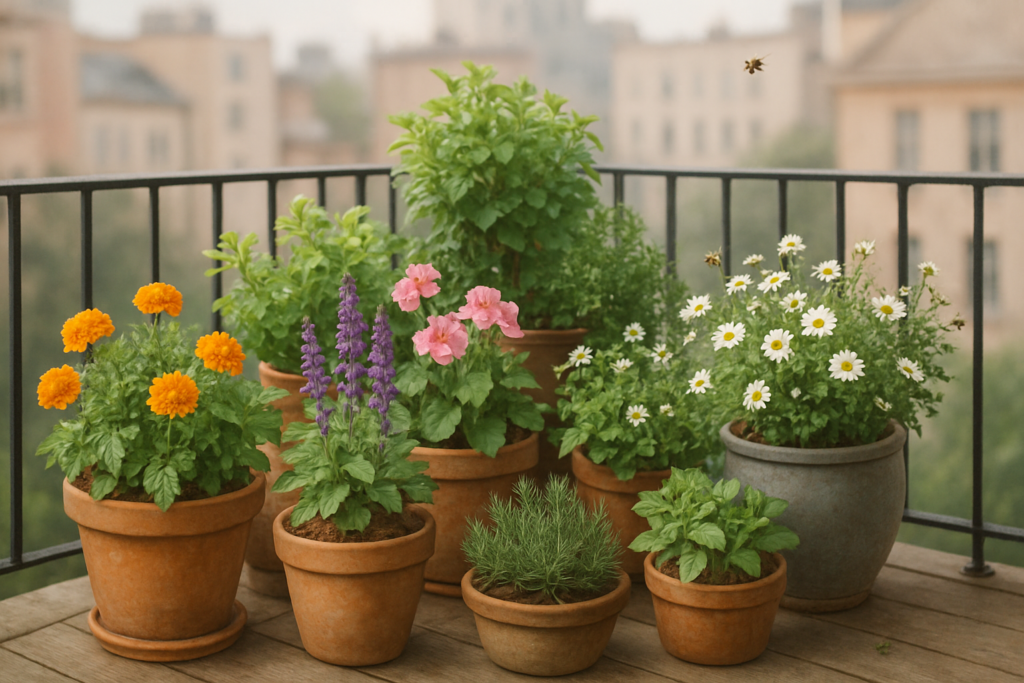
- Group pots together: Clustered containers shade each other and create a more humid microclimate than isolated pots.
- Light‑coloured pots reflect heat, while dark pots can overheat roots in full sun.
If you can only fit small pots, think in connected clusters rather than single units. For instance, a large central pot with a shrub or small tree, surrounded by smaller herb and flower pots, can share shade and moisture.
2. Water Deeply, Then Pause
Frequent light sprinkles encourage shallow roots and leave the deeper soil dry. A biosphere‑friendly pattern is:
- Water until you see a gentle trickle from the drainage holes.
- Let the pot drain fully.
- Wait until the top few centimetres of soil are dry before watering again (you can test with a finger).
This encourages roots to explore the full depth of the pot and makes plants more resilient between waterings.
3. Capture and Reuse Rain Where You Can
Even small spaces can make better use of rain:
- Use trays or saucers wisely: In hot spells, a shallow saucer can act as a mini reservoir for thirsty plants, especially on balconies where excess water won’t damage anything below.
- Position thirsty plants where they catch the most runoff from a roof edge or balcony railing.
- Collect clean greywater from rinsing vegetables (no harsh soaps) to top up thirsty containers in dry spells.
The aim is to slow, spread and sink water in your pots rather than letting it race away down the drain.
Designing Containers for Pollinators and Wildlife
Even a few square metres can be a significant stepping stone for bees, hoverflies, butterflies and other small creatures, especially in dense urban areas. With a little thought, your container garden can offer nectar, pollen, seeds and shelter almost year‑round.
1. Mix Functions in Each Pot
Instead of dedicating one pot purely to looks or yield, combine roles where possible:
- Edibles with flowers: Herbs like thyme, chives and mint offer both harvests and bloom for pollinators.
- Structural with soft: A dwarf shrub or small grass in the centre, underplanted with trailing flowering plants.
- Perennials with annuals: Long‑lived plants provide the backbone, while annuals fill gaps and boost seasonal colour and nectar.
Think of each pot as a tiny “guild” rather than a single specimen.
2. Aim for a Long Season of Bloom
In a biosphere garden, the goal is not just a summer burst but a sequence of resources through the year. In containers this might look like:
- Early: Bulbs and early‑flowering herbs for the first bees.
- Mid: A mix of open‑faced flowers that are easy for insects to access.
- Late: Plants that flower well into autumn, plus seedheads you leave standing.
Group pots so that at any time, something is on offer.
3. Offer Shelter, Not Just Food
Food attracts wildlife; shelter helps them stay. Simple, low‑effort options include:
- Leaving hollow stems on some plants over winter for insects to overwinter in.
- Keeping a corner a little untidy: A pot with leaf litter or a dense groundcover can harbour small invertebrates.
- Adding a shallow water dish with stones for bees and other insects to drink from without drowning.
These touches turn your balcony or patio from a floral pit‑stop into a genuine micro‑habitat.
Keeping It Manageable and Joyful
Container biosphere gardening should feel like a relationship, not a list of chores. A few habits keep it enjoyable and sustainable.
- Observe first: Spend a few minutes just looking – which pots dry fastest, which attract insects, which struggle? Small adjustments often matter more than big projects.
- Start smaller than you think: It’s better to have five thriving, well‑watered, mulched containers than twenty stressed ones.
- Recycle and re‑pot slowly: When a plant fails, treat it as a chance to refresh the soil, compost what you can, and re‑plant with what you’ve learned.
- Embrace some wildness: Self‑seeded plants, moss on the soil surface, a spider web between pots – these are signs that your containers are behaving more like a living ecosystem.
Every pot you tend is a small act of restoration. On a warming planet, even a balcony can become a resilient pocket of life – a tiny biosphere stitched into the wider fabric of the city.
Whether you’re working with three pots on a windowsill or a crowded roof terrace, the principles are the same: build living soil, manage water thoughtfully, design for wildlife, and let your containers talk to each other. From there, your small space can grow into something far bigger than it looks.