When we think about garden health, it’s easy to start with plants: which varieties to choose, how much sun they need, when to prune. But underneath every thriving biosphere garden is something even more important and often overlooked: living soil.
Soil is not just “dirt” holding up roots. It’s a complex community of organisms—fungi, bacteria, insects, worms, tiny arthropods—interacting with minerals, water, and air. When that community is thriving, your garden can become more resilient to drought, heat, pests, and disease, and need far less outside input.
In this article we’ll look at soil as a living system, then walk through simple, low-effort ways you can support that life in an ordinary home garden.
Seeing Soil As An Ecosystem, Not A Product
Bagged compost, topsoil, fertiliser granules—it can feel as if soil is something we buy and add. Ecological gardening takes a different view: soil is something we collaborate with.
In a healthy soil ecosystem, there are three main layers working together:
- Mineral layer: tiny particles of sand, silt and clay, plus stones and bedrock underneath.
- Organic matter: dead leaves, roots, wood, compost and humus (well-decomposed material).
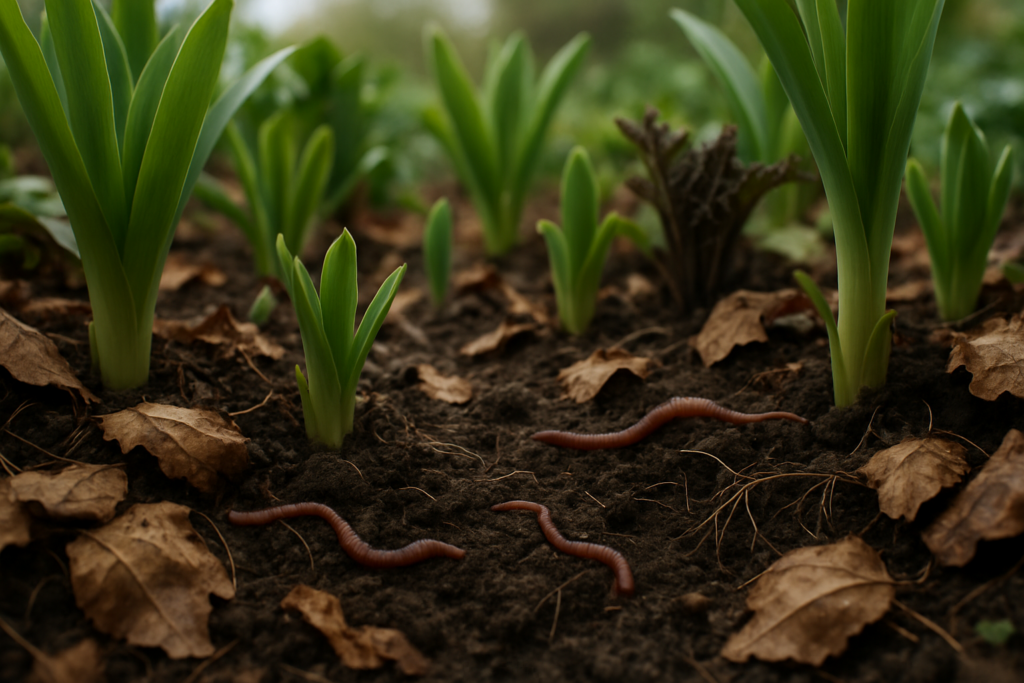
- Living organisms: roots and a vast web of fungi, bacteria, nematodes, insects, worms and more.
Instead of trying to control each piece with quick fixes, biosphere gardening asks: what does this whole community need to stay in balance? Once you shift your focus from feeding plants to feeding soil life, many gardening jobs become easier.
Step 1: Observe Your Soil’s “Personality”
Every soil has its own character. Before changing anything, get to know what you’re working with. You don’t need lab tests to start—simple observations tell you a lot.
Texture: sand, silt or clay?
Rub a small handful of moist soil between your fingers:
- Gritty and loose: more sandy; drains quickly, warms fast, can dry out.
- Smooth and silky: more silt; holds water fairly well, easily compacted when walked on.
- Sticky and mouldable: more clay; holds water strongly, rich in nutrients but slow to drain.
Most garden soils are a mix. The aim isn’t to “fix” texture with huge amounts of imported material; it’s to work with what you have, improving structure and life so roots and soil organisms can move through it.
Structure and compaction
Take a trowel and dig a shallow spadeful. Look for:
- Crumb structure: small, irregular clumps (aggregates) that hold together but break apart easily in your hand.
- Smearing or solid slabs: signs of compaction, often from repeated trampling or heavy machinery.
- Visible roots and creatures: roots exploring at different depths, worms, beetle larvae and other small life.
Healthy soil feels springy underfoot, drains slowly but not instantly, and reveals many small tunnels and crumbs when you dig. Compacted soil tends to be hard to penetrate, with water pooling on the surface.
Smell and moisture
Smell a handful of moist soil. Living soil often has a rich, earthy scent. Sour or rotten smells can suggest poor drainage and low oxygen.
These observations give you a baseline. The steps below work in most gardens, but knowing your soil’s personality helps you choose which to prioritise.
Step 2: Cover Bare Ground, Always
In nature, bare soil is rare and temporary. Left exposed, soil life is stressed by sun, wind and heavy rain, and valuable carbon and nutrients are lost. One of the simplest, most powerful things you can do is to keep soil covered.
Mulch like an ecosystem
Mulch is any loose material placed on the soil surface. Instead of using decorative gravel or plastic, think in terms of forest floor:
- Organic mulches: shredded leaves, wood chips, straw, partially broken-down garden compost.
- Living mulches: low-growing groundcover plants, clover, creeping thyme, self-seeding annuals in paths and bed edges.
Benefits of organic mulching include:
- Reducing water loss and evening out soil temperature.
- Feeding fungi and other soil organisms as the mulch slowly breaks down.
- Reducing weed germination by blocking light.
Spread a loose layer a few centimetres deep around perennials, shrubs and trees, keeping a small gap around stems to avoid rot. On heavy clay, start with a lighter layer at first to avoid keeping the surface too wet in cold seasons.
Use plants as partners
Where you can, let plants share space instead of insisting on bare soil between them. Interplanting and groundcovers:
- Shade the soil and protect it from heavy rain.
- Offer nectar and pollen across more of the year for beneficial insects.
- Add diversity below ground through different root types.
Think of your beds as layered plant communities, not rows of isolated individuals.
Step 3: Feed Soil Life, Not Just Plants
Chemical fertilisers deliver nutrients directly to plant roots, but they can bypass or even disrupt the relationships between plants and soil organisms. For a resilient biosphere garden, focus on gentle, slow-release feeding that builds the food web.
Compost as a connector
Compost is often described as “plant food”, but it’s better to see it as a community starter. Well-made compost carries a diversity of microbes and a balanced mix of nutrients and carbon.
Simple ways to use compost ecologically:
- Thin top-dressing: once or twice a year, scatter a fine layer (like a dusting, not a thick blanket) over planted beds, then cover with mulch. This lets worms and water carry it down slowly.
- Planting pockets: when planting into poor soil, mix a small amount of compost into the backfill rather than filling a whole hole with it. This encourages roots to venture beyond the planting hole.
If you don’t have your own compost system yet, start small: a simple heap of mixed browns (dry leaves, shredded paper, small twigs) and greens (kitchen scraps, fresh plant cuttings) can evolve over time. The goal isn’t perfection; it’s returning organic matter to the soil cycle.
Diverse organic inputs
In a biosphere approach, diversity is as important below ground as above. Different materials feed different soil organisms. Over a year, try to vary what you add:
- Leaf mould or collected autumn leaves.
- Shredded prunings, twigs or chipped branches.
- Cut-down stems left in place over winter and chopped onto the surface in spring.
By layering different textures and decomposition speeds, you create habitats for a wider range of fungi and invertebrates, building resilience into the system.
Step 4: Reduce Disturbance And Let Networks Grow
Every time we dig or double-dig a bed, we physically break apart fungal networks, microbe communities and worm tunnels. Some disturbance is inevitable in a garden, but moving towards “low dig” or “no dig” methods can help soil biology thrive.
Shift from turning soil to layering
Instead of emptying a bed and thoroughly turning the soil each season, try:
- Cut annual plants off at the base, leaving roots in the ground to decompose.
- Remove or chop any thick, woody stems on the surface.
- Add a thin layer of compost across the bed.
- Cover with mulch.
- Plant directly into this layered surface.
Over time, the layers blend as soil life moves between them. Fungal networks, particularly mycorrhizal fungi, have more chance to form connections between plant roots, supporting nutrient exchange and water-sharing.
Protect pathways
Compaction usually happens where we walk. Simple adjustments can make a big difference:
- Define clear paths and avoid stepping into beds.
- Mulch paths with wood chips, which cushion the soil and slowly enrich it underneath.
- Use stepping stones in narrow beds to spread weight.
This keeps the soil in growing areas looser, so roots and organisms can move more freely, and water can soak in rather than run off.
Step 5: Water In Ways That Support Life
Water and soil life are deeply linked. Too much water and soil pores fill up, shutting out oxygen; too little and microbes and plant roots go dormant or die back. How you water can help your soil community stay balanced.
Water deeply, less often
Frequent, shallow watering encourages shallow roots and leaves deeper soil layers underused. When possible:
- Water less often but long enough that moisture reaches 15–20 cm down.
- Check with a trowel: if only the top couple of centimetres are wet, water a bit more.
- Water under the mulch, at soil level, rather than spraying foliage.
Deep-rooted plants connect different soil layers, moving nutrients and water upwards and feeding deeper-dwelling organisms.
Slow the flow
Heavy rain or fast hose watering can erode bare areas and wash away fine particles and organic matter. To protect structure:
- Maintain mulch cover to break the fall of raindrops.
- Use watering roses or softer spray settings rather than a strong jet.
Everything you do to slow water down and invite it to soak in also gives soil life time to respond, rebuild structure and store moisture for drier spells.
Bringing It All Together: A Small, Ongoing Practice
Supporting living soil doesn’t require a grand redesign. Think of it as a gentle, seasonal rhythm:
- Each season: observe a few spots; smell the soil, notice crumbs and creatures.
- As you prune and tidy: ask, “What can return to the soil?” and keep more material on-site as mulch or compost.
- When you plant: disturb only what you must; feed the whole bed with a light compost layer instead of individual plants with strong fertilisers.
- After dry or wet extremes: notice where water pooled or plants wilted first; adjust mulching and planting density to protect the soil there.
Over time, you’ll see signs that your soil community is strengthening: more worms and insects when you dig, beds that hold moisture longer, plants that cope better with weather swings, and an overall feeling that your garden is working with you.
That’s the heart of a biosphere garden: many small lives, linked together, quietly making resilience below your feet.