Water is the quiet engine of every garden, but in a warming, less predictable climate it is also one of our scarcest resources. A biosphere garden does more than survive dry spells; it is designed from the soil up to hold, share and cycle water intelligently.
In this post, we will explore how to make your garden truly water-wise: not just by watering less, but by building living soil, choosing the right plants and reshaping your space so every drop works harder.
Start with the soil: your living water tank
When gardeners think about saving water, they often jump straight to sprinklers and watering cans. But the biggest “water butt” you own is your soil. Healthy soil acts like a sponge, storing rainfall and slow-release watering for when plants need it most.
Three simple principles underpin water-wise soil:
- Keep it covered – bare soil loses moisture quickly and is prone to compaction and erosion.
- Feed the soil food web – microbes, fungi and invertebrates create structure that holds water.
- Avoid unnecessary disturbance – constant digging breaks apart that structure and speeds up drying.
Mulch as a moisture shield
Mulch is one of the most effective tools for water-wise gardening. A good organic mulch layer acts like a blanket: it slows evaporation, buffers soil from harsh sun and rain, and gradually feeds the organisms that improve soil structure.
Useful mulching materials include:
- Shredded leaves and leaf mould
- Garden-made compost
- Wood chips or shredded bark (especially around shrubs and trees)
- Straw or coarse grass clippings (in thin layers so they do not mat)
For most borders and beds, aim for a mulch layer of a few centimetres thick. Keep mulch a small distance from the stems or trunks of plants to reduce the chance of rot, and top it up once or twice a year as it breaks down.
Build organic matter for long-term resilience
Organic matter is what gives soil its dark, crumbly feel. It can hold many times its weight in water, and it helps bind tiny mineral particles into stable aggregates with pores between them. Those pores are where both water and air live.
Ways to steadily increase organic matter in your garden include:
- Regular compost additions – lightly fork or rake compost into the top couple of centimetres of soil, rather than digging it deep.
- Green manures and cover crops – in any empty veg beds, sow quick-growing cover plants and cut them down to feed the soil surface.
- Leaving roots in place – when annuals finish, cut them at the base instead of pulling them up; the roots decompose into food and structure underground.
Soils with higher organic matter stay cool and moist for longer after rain or watering, reducing how often you need to water at all.
Choose plants that are allies, not liabilities
A water-wise biosphere garden is not a garden of cactus and gravel (unless you want it to be). Instead, it relies on plant communities that suit your conditions and help each other use water more efficiently.
Favour climate-fit and locally adapted species
Plants that evolved in climates similar to yours often have built-in drought strategies, from deep roots to small, tough leaves. Native plants are particularly valuable, because they support local insects, fungi and birds as well as being well-matched to typical rainfall patterns.
Look for plants that:
- Tolerate your summer dry spells without daily watering once established.
- Support pollinators and other beneficial insects with flowers across the growing season.
- Offer multiple functions – for example, groundcover for shade and weed suppression, or flowering shrubs that also provide bird habitat.
If you already have thirsty species that wilt quickly, consider gradually replacing some with more resilient options, starting in the areas you find hardest to keep watered.
Layer your planting to shade the soil
In a biosphere garden, plants are arranged in layers, much like a natural woodland edge. This kind of design keeps direct sun off the soil, reducing evaporation while creating niches for biodiversity.
Think in terms of:
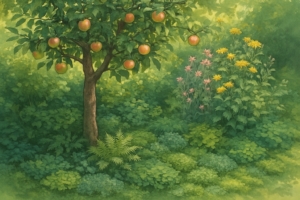
- Canopy layer: small trees or large shrubs that cast dappled shade.
- Understory layer: medium shrubs and tall perennials.
- Ground layer: low-growing perennials and groundcovers that knit the soil surface together.
By filling vertical space, you achieve rich habitats and slow down hot, drying winds at ground level. The cooler, more humid microclimate between plants means any water you do apply goes further.
Design your garden to catch and keep every drop
Biosphere gardening is about working with natural flows, and water is one of the most important flows in any landscape. Instead of treating rain as something to shed away as quickly as possible, we can slow it down and invite it to soak in.
Observe where water currently goes
Before changing anything, watch your garden during and after a decent rainfall. Notice:
- Where does water pool or run off rapidly?
- Which beds dry out first in a sunny week?
- Are there downpipes or hard surfaces sending concentrated flows in one direction?
These observations show you where you can intervene to slow, spread and sink water into the soil, instead of losing it to drains.
Create gentle contours and micro-catchments
Even in a small urban garden, subtle changes in shape can make a big difference to how water behaves.
- Swales and basins: very shallow, level-bottomed depressions along the contour of a slope can catch runoff and allow it to soak in. Plant them with species that appreciate extra moisture.
- Raised paths and sunken beds: slightly raising paths and lowering beds by a few centimetres can direct water into the root zones rather than onto compacted walkways.
- Contour planting: on a slope, plant dense bands of shrubs or perennials along the contour line to act as living barriers that slow water.
The aim is not to create large ponds, but to encourage rainfall to linger just long enough to infiltrate rather than rush away.
Harvest rain from roofs and hard surfaces
Roofs, patios and driveways shed astonishing amounts of water in a storm. With simple interventions, that runoff can become a key resource for your biosphere garden.
Consider:
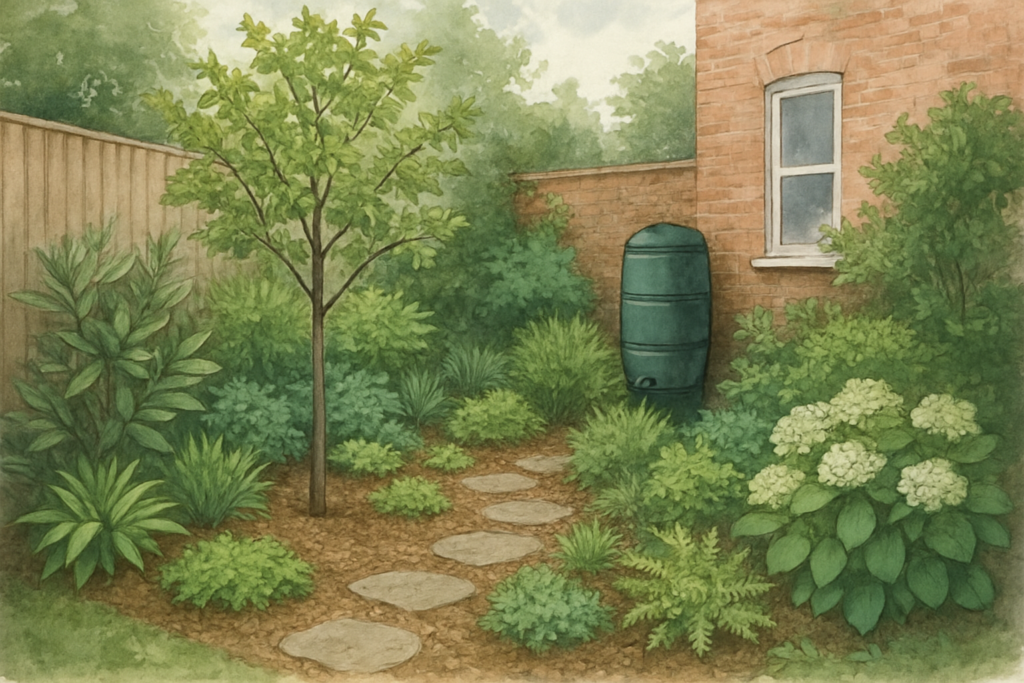
- Water butts or tanks on downpipes to store water for dry spells.
- Directing overflow from tanks into rain gardens or well-mulched planting beds rather than into drains.
- Permeable surfaces for paths and seating areas, allowing water to soak through instead of run off.
Every litre you catch from a roof is a litre you do not need to pull from mains water or groundwater later on.
Watering wisely: timing, tools and technique
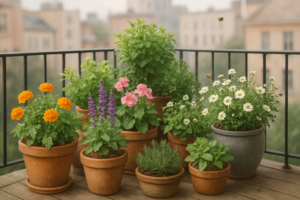
Even the most resilient garden will sometimes need supplementary watering, especially in containers or in the first year after planting. The goal is to water in a way that encourages deep, independent root systems and wastes as little as possible.
Water less often, more deeply
Frequent, shallow watering trains roots to hover near the surface, where soil dries out fastest. Deep, occasional soaking encourages roots to travel downwards, making plants more drought-resilient.
A practical approach:
- Check soil moisture a few centimetres below the surface; if it is still cool and damp, wait.
- When you do water, apply enough that the top 15–20 centimetres of soil are moistened.
- Allow the soil to partially dry between waterings to signal roots to explore deeper layers.
Drip lines and leaky hoses laid under mulch are particularly effective, as they deliver water slowly and directly to the root zone with minimal loss to evaporation.
Choose the right time of day
Early morning is usually the best time to water: temperatures and evaporation are lower, and leaves have a chance to dry quickly once the sun is up. This helps reduce the risk of some fungal diseases.
Evening watering can also work, especially in very hot weather, but avoid leaving foliage wet overnight in humid conditions where disease pressure is high.
Prioritise what truly needs water
When water is limited, it helps to triage rather than trying to water everything lightly.
- High priority: newly planted trees, shrubs and perennials; edibles in active growth; plants in containers.
- Medium priority: established perennials and shrubs in particularly hot, exposed spots.
- Low priority: established, drought-tolerant species with deep root systems; lawns that can safely go dormant and recover later.
Direct your efforts where they will make the most difference to survival and long-term resilience.
Water-wise gardens as climate refuges
Designing for water efficiency is not only about convenience or lower bills. In an ecological, biosphere-based approach, it is about creating small pockets of climate resilience in our streets and cities: places where soils stay alive, pollinators find nectar even in heatwaves, and trees have enough stored moisture to keep shading our homes.
Every mulched bed, every rain garden and every carefully chosen plant is a vote for a future in which our gardens are part of the solution to climate stress, not another system under strain.
If you start with the soil, choose climate-fit plants, shape your space to catch water and water thoughtfully when needed, your garden can become a thriving, water-wise biosphere that supports life far beyond its boundaries.