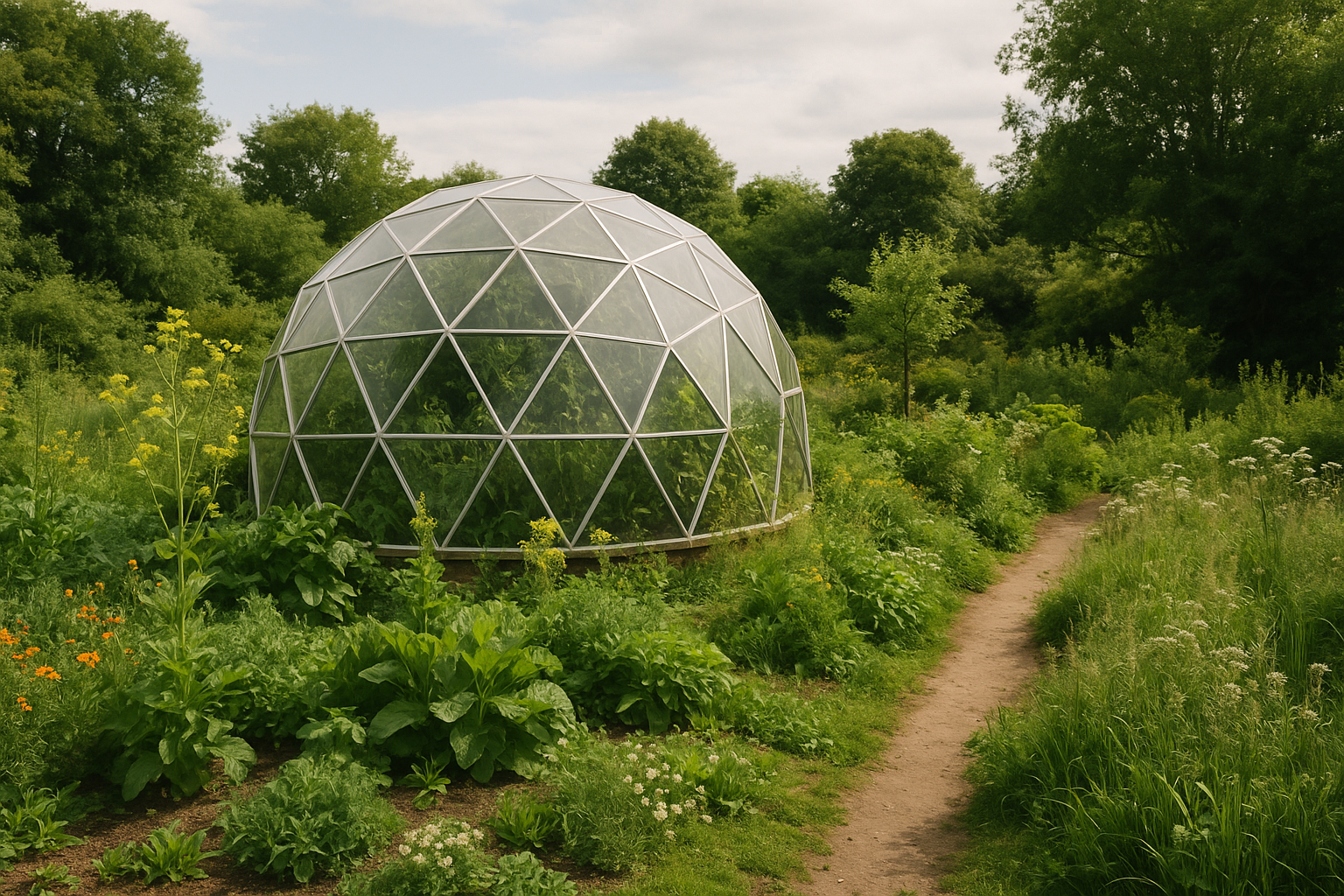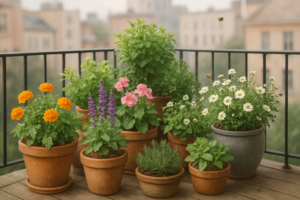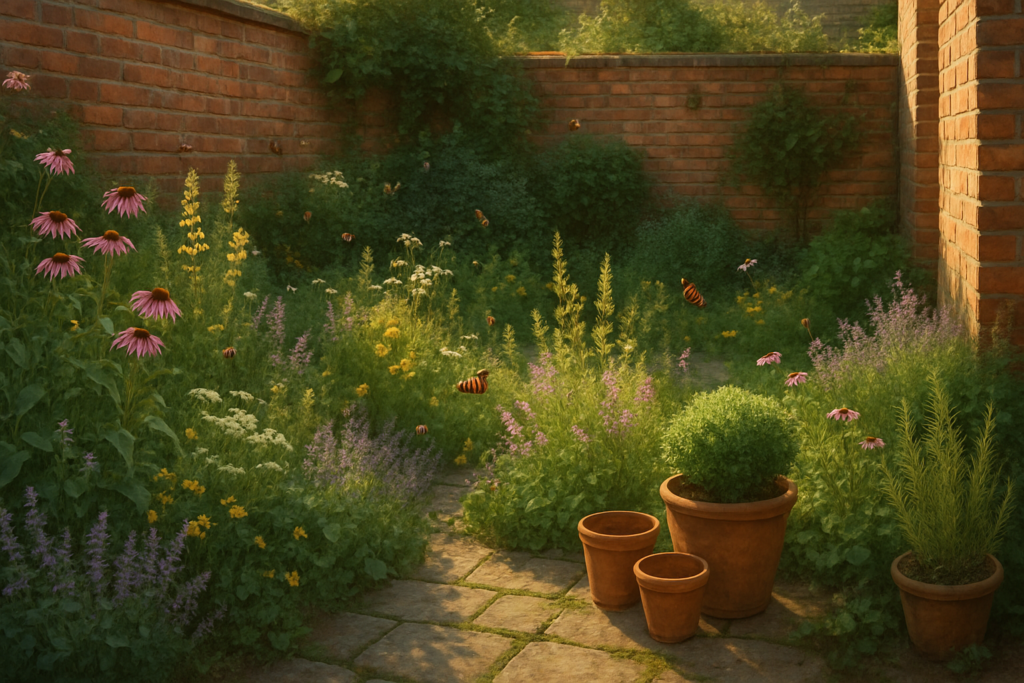
Pollinators are the tiny workers that hold our garden biospheres together. Without them, fruit trees stay empty, seed heads don’t form, and many wildflowers simply disappear. The good news: even a small London courtyard, balcony, or shared front garden can become a powerful refuge for bees, butterflies, hoverflies and more.
In this guide, we will look at how to design and plant your garden so it actively supports pollinators and fits the realities of busy, urban life: limited space, changing climate, and the need for low-input, resilient planting.
Think Like a Pollinator: What They Actually Need
Before buying plants, it helps to think in terms of habitat rather than decoration. Different pollinators need different things, but there are a few basics they all share.
The three essentials
- Food – nectar and pollen from flowers across as many months of the year as possible.
- Shelter – undisturbed places to nest, hide and overwinter.
- Safety – freedom from pesticides and from constant disturbance.
Instead of asking, “What looks good in this bed?”, try asking, “If I were a bee in February, or a hoverfly in August, what could I eat here? Where could I rest? Where can I survive the winter?” This shift is at the heart of biosphere gardening.
Designing a Pollinator-Friendly Planting Plan
You do not need a huge plant list to make a real difference. Aim for a modest palette of reliable, climate-resilient plants that flower in succession. Diversity matters, but so does abundance: a few well-chosen species, repeated, can feed more insects than dozens of one-off specimens.
1. Cover the seasons in layers
Pollinators are active for much longer than we often notice. Here is a simple way to plan:
- Early season (late winter to mid-spring)
- Focus on flowers that offer nectar and pollen when little else is available.
- Think of bulbs and early shrubs to wake up bumblebees and solitary bees.
- Even one or two early-flowering pots on a balcony can be a lifeline.
- Main season (late spring to late summer)
- Fill the heart of the garden with a mix of perennials, herbs and flowering shrubs.
- Choose plants that cope with both hot, dry spells and sudden downpours; deep-rooted and drought-tolerant species are especially helpful as the climate shifts.
- Late season (late summer into autumn)
- Late flowers are critical for pollinators building up reserves before winter.
- Many gardens “go quiet” in September; that is exactly when ivy, late asters and other long-flowering plants can shine.
When you sketch or mentally map your space, check that each of these windows has at least a few strong floral resources.
2. Prioritise simple, open flowers
Highly bred, double flowers often look impressive to us but are difficult or impossible for insects to use. Pollinators prefer simple, open forms where pollen and nectar are easily reached.
- Choose single, not double, versions of roses, dahlias and other ornamentals.
- Look for visible “landing pads” and central discs on the flowers.
- Herbs like oregano, thyme and chives are especially valuable: aromatic, drought-tolerant and buzzing with insects in summer.
If you already have double-flowered plants you love, that is fine; just balance them with plenty of open, insect-friendly companions.
3. Think in patches, not sprinklings
From an insect’s perspective, a generous patch of the same flower is like a well-stocked supermarket aisle, while single, scattered plants are more like vending machines on different streets.
- Plant in clumps or drifts of at least three to five of the same plant together.
- Repeat those clumps in different parts of the garden if you have space.
- On a balcony, several pots of the same nectar-rich plant have more impact than a single specimen of five different kinds.
This “mass planting” style also reads as calm and coherent to the human eye, which is helpful in small urban plots.
Creating Shelter: The Hidden Side of Pollinator Care
Flowers get most of the attention, but without places to nest and overwinter there is no next generation of pollinators to enjoy those flowers.
1. Loosen up your tidy instincts
Urban gardens are often managed like outdoor rooms: swept, clipped and cleared. To support wildlife, we need to leave a little more mess.
- Leave some hollow stems when you cut perennials back, so insects can shelter inside.
- Keep a corner “wild” with piled twigs, leaves and some bare soil.
- Delay major clear-ups until spring, so overwintering insects are not disturbed mid-winter.
Think of this as “intentional untidiness” – structured, but relaxed enough to offer real habitat.
2. Offer nesting sites
Not all pollinators use the same kinds of nests. A mix of micro-habitats is ideal.
- Ground nesters (many solitary bees) need patches of bare or lightly vegetated soil.
- Cavity nesters look for hollow stems, old beetle holes in wood, or purpose-built bee hotels.
- Bumblebees may adopt old rodent holes, dense grass tussocks, or gaps under sheds.
If you do add a bee hotel, place it where it will stay reasonably dry, with morning sun if possible. The most important thing is to avoid chemical treatments on any nearby surfaces.
Climate-Resilient Choices for Urban Pollinator Gardens
Biosphere gardening is about resilience as much as beauty. Our weather is becoming less predictable, with longer dry spells, heavier rain, and more temperature swings. Plants that can ride out these changes will provide steadier food for pollinators.
Look for these plant traits
- Deep or fibrous roots that help plants access water and stabilise soil.
- Aromatic foliage (common in Mediterranean herbs), which often indicates drought tolerance.
- Long flowering periods or the ability to re-bloom if lightly deadheaded.
- Adaptability to different soils, especially if your garden soil is compacted or shallow.
Mixing native plants with well-behaved non-native species can give you both ecological value and resilience, especially in small, enclosed city plots where conditions are quite different from surrounding countryside.
Support the soil, support the flowers
Strong root systems and healthy soil biology go hand in hand. To help your pollinator plants thrive:
- Mulch with compost or well-rotted organic matter to improve moisture retention and feed soil life.
- Avoid digging more than necessary; this preserves soil structure and ground-dwelling insects.
- Limit fertilisers; overly rich soils can produce lots of leaf at the expense of flowers.
Every flower you see is the tip of an underground community of roots, fungi and microbes. When we garden for that hidden community, pollinators benefit too.
Practical, Low-Input Actions You Can Take This Month
Transforming your garden into a pollinator haven does not have to be a grand redesign. Start with a few simple changes and build from there.
Quick wins for any size space
- Add one new nectar-rich plant that flowers in a “gap month” when your garden is quiet.
- Let at least one patch of lawn grow longer or convert a strip of it into a flowering border.
- Stop using pesticides and experiment with hand-picking pests, barriers, or simply tolerating minor damage.
- Leave some stems and leaf litter in a discreet corner over winter.
- Observe – spend 10 minutes watching which flowers attract the most insects, and build your future plant choices around those.
Even small, imperfect steps shift your space closer to a functioning urban biosphere – one that supports insects, birds, soil life and, of course, you.
If you would like help choosing plants that work for your particular microclimate, or reshaping existing beds to be more pollinator-friendly, this is exactly the kind of quiet transformation we love to design and care for at Biosphere Gardens.