Compost is one of the simplest ways a home gardener can support biodiversity, build resilient soil, and take real climate action from their own back garden.
Instead of sending organic matter to landfill, you can transform it into a dark, crumbly, living material that feeds your plants, shelters microbes and insects, and helps your soil hold on to water and carbon. In a biosphere garden, compost is not just fertiliser – it is the engine room that keeps the whole system cycling.
Why Compost Belongs at the Heart of a Biosphere Garden
A biosphere garden works by closing loops. Every output becomes an input somewhere else. Composting is a clear example of this in action.
When you compost, you:
- Feed the soil food web – Compost introduces and supports fungi, bacteria, nematodes, springtails, and countless other tiny organisms that keep your soil alive.
- Increase resilience to drought and heavy rain – Organic matter acts like a sponge, holding moisture during dry spells and improving drainage when it is wet.
- Support above‑ground biodiversity – Healthy soil grows healthier, more diverse plants, which in turn support more insects, birds, and other wildlife.
- Store carbon in the ground – Well‑made compost turns what could be methane‑producing waste in landfill into stable organic matter that can sit in your soil for years.
You do not need a large space or a perfect system to start. The key is to match your compost method to your home and habits, so that it becomes a natural part of how you live with your garden.
Choosing the Right Compost System for Your Space
Before you begin, think about three things: space, time, and the kind of waste you produce.
1. The simple cold heap
Best for: medium to large gardens; people who want a low‑effort, forgiving system.
A cold heap is just what it sounds like: a pile or bin where you gradually add materials and let nature do the rest. It breaks down slowly, usually over many months.
- Pros: very little work, handles a lot of garden waste, forgiving of imbalance.
- Cons: slower, may be less tidy, can attract rodents if food waste is not buried or managed well.
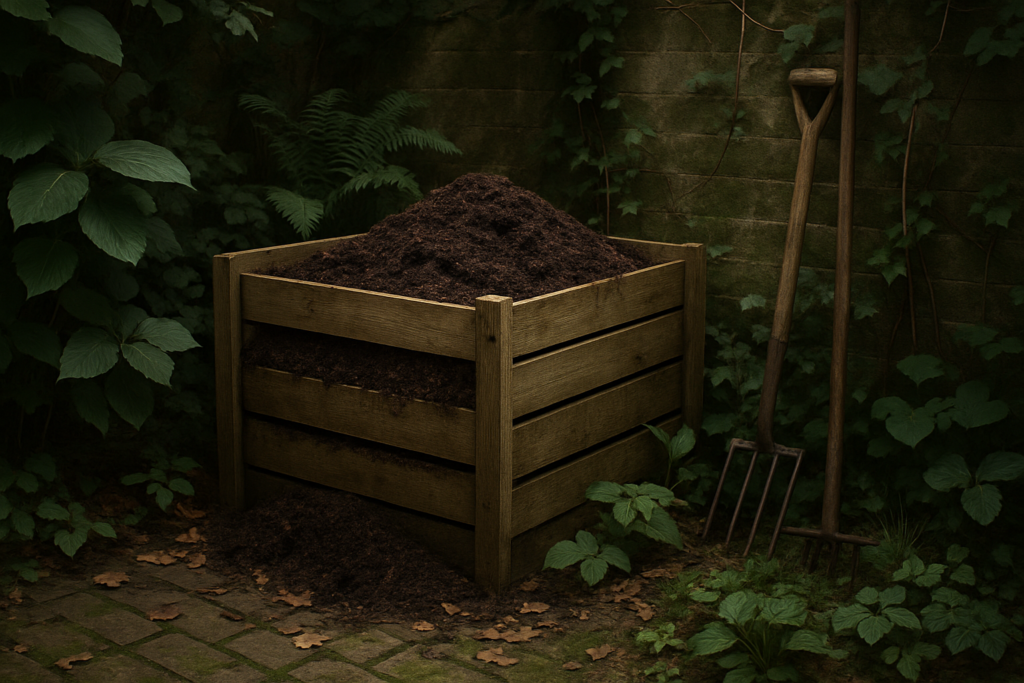
If you choose a heap, aim for at least a cubic metre in size to hold heat and moisture. A simple slatted wooden bay or a sturdy plastic bin will do. Place it directly on soil so that worms and other soil life can move in.
2. Hot composting bin
Best for: gardeners who want faster results and are happy to be more hands‑on.
Hot composting uses a well‑balanced mix of materials and regular turning to generate heat. This speed‑ups decomposition and can kill many weed seeds and diseases.
- Pros: quick results (often in a few months), can handle a good mix of materials, including some that are harder to break down.
- Cons: needs more attention – you will need to turn the heap, watch moisture levels, and keep a good mix of ingredients.
This suits people who enjoy the process and like checking in on their compost often, much like tending a sourdough starter or a wormery.
3. Wormery (vermicompost)
Best for: small spaces, balconies, courtyards, or a kitchen‑door system for food scraps.
A wormery uses composting worms in a contained box or tower. They eat kitchen waste and produce a rich castings (vermicompost) and a liquid fertiliser that can be diluted for watering plants.
- Pros: compact, tidy, works well in urban settings, produces very nutrient‑dense compost.
- Cons: worms need some care: protection from extreme heat/cold, and careful feeding to avoid smells or fruit flies.
Wormeries work beautifully alongside a garden heap: use the wormery for daily kitchen waste and the heap for bulkier, woody materials.
Building a Balanced Compost: Browns, Greens and the Right Texture
Whatever system you choose, the same basic principles apply. Composting is simply the process of feeding a community of decomposers. They need air, water, and a balanced diet.
What to put in: the biosphere compost shopping list
Think in two categories:
- Browns (carbon‑rich) – dry, fibrous materials that provide energy and structure.
- Fallen leaves
- Shredded cardboard (plain, not glossy)
- Paper towels and unprinted paper, torn up
- Straw and dry plant stems
- Wood shavings or sawdust from untreated wood
- Greens (nitrogen‑rich) – wetter, fresher materials that feed microbes and heat the pile.
- Fruit and vegetable scraps
- Coffee grounds and tea leaves (without plastic tea bags)
- Fresh grass clippings
- Soft prunings and spent annuals
- Weeds that have not gone to seed
A good rule of thumb is to add more browns than you think you need. Many home heaps get slimy or smelly because they are loaded with greens and short on structure.
What to leave out (or treat with caution)
- Cooked food, meat, and dairy (they can attract rats and create smells in open heaps).
- Glossy or heavily printed paper and cardboard.
- Large branches or woody pieces unless well chipped.
- Weeds with ripe seeds or invasive roots if your heap does not get hot.
- Pet waste from dogs and cats.
These can sometimes be handled in specialised systems, but for a standard garden compost it is simpler to keep them out.
Air, moisture, and texture: how to keep the biology happy
To build a resilient garden biosphere, you want compost that is softly crumbly, smells earthy, and is full of life. To get there, focus on three things:
- Air
- Mix browns and greens rather than dumping them in layers and walking away.
- Turn or poke holes into the heap now and then to prevent compacting, especially after adding a lot of grass clippings.
- Moisture
- Compost should feel like a wrung‑out sponge: moist but not dripping.
- If it is too dry, water it lightly and add fresh greens.
- If it is too wet or smelly, mix in more browns and open it up to more air.
- Texture
- Chop up larger stalks and prunings so they break down more easily.
- A mix of fine and coarse material creates air pockets and habitat for different organisms.
Using Compost to Feed Your Garden Biosphere
Finished compost does not need to be perfect or completely uniform. If most of the material has broken down into a dark, crumbly mix and smells like woodland soil, you can start using it. Any larger pieces can go back into a new heap as starter material.
Gentle ways to add compost without disturbing the soil web
In a biosphere garden we aim to disturb the soil as little as possible. Heavy digging and turning can damage fungal networks and break up soil structure built over years.
Here are low‑disturbance ways to use your compost:
- Top‑dressing – Spread a thin layer around the base of perennials, shrubs, and trees. Let worms and rain work it down.
- Mulching – After a compost layer, add a surface mulch of leaves, wood chips, or straw. Compost feeds the soil; mulch protects it.
- Compost pockets – For new plantings in heavy or poor soil, dig a small hole, mix in some compost with the existing soil, and plant into that enriched zone.
- Potting mixes – Sieve finer compost and blend it with other materials to make a living potting soil for containers (keeping in mind drainage and plant needs).
Each of these methods quietly boosts the life in your soil without turning it into a construction site.
Compost as Climate Action in Your Garden
When we talk about climate resilience in home gardens, we often think about drought‑tolerant plants or capturing rainwater. Composting belongs in the same toolkit.
Every banana skin or armful of prunings you compost is organic matter kept out of landfill and returned to the living cycle.
Over time, gardens that receive regular compost become more self‑reliant. They are less dependent on imported fertilisers, bags of peat‑based compost, and constant watering. Deep, living soil can buffer your plants from heat, wind, and erratic rainfall.
Start small: a kitchen caddy, a corner bin, a worm tower. Notice how quickly your view of “waste” changes. In a biosphere garden, there is no such thing as away – only new beginnings for the matter and energy already in your care.
Your compost heap is not just a pile at the back of the garden. It is an ecosystem, a climate tool, and a quiet act of repair you can tend every day.