If you have a shady corner you secretly dislike, you are actually sitting on a powerful climate tool. Shade is more than a “difficult” gardening condition – it is natural air‑conditioning, a refuge for wildlife, and a safe house for soil life when heat and drought arrive.
In a biosphere garden, we treat shade as sanctuary. Instead of forcing sun‑loving plants to struggle, we lean into the cool, moist microclimate and invite in species that thrive there. The result is a layered, lush space that steadies temperature extremes and quietly supports biodiversity across the whole garden.
Why Shade Matters in a Climate‑Smart Garden
Hotter summers, harder rain, longer dry spells – you can feel climate change in the garden already. Shade helps your whole biosphere cope.
- Cooling the soil: Shade lowers soil temperatures and slows evaporation. Microbes, fungi and invertebrates can keep working instead of going dormant or dying back in extreme heat.
- Smoother moisture levels: A shady bed dries out more slowly, which means fewer wild swings between soaked and bone dry. Plant roots and soil fungi love this stability.
- Refuge for wildlife: Many invertebrates, amphibians, birds and small mammals depend on cool, sheltered spots to rest, forage and hide from predators.
- Buffering hard weather: Dense, layered planting in shade softens the impact of heavy rain, reducing erosion and holding more water where it falls.
Instead of battling the dim light, the biosphere approach is to ask: what life wants to flourish here? Then we build the micro‑habitat to match.
Step 1: Read Your Shade Like a Microclimate Map
Not all shade is equal. Spend a few days observing before you plant or re‑design.
Types of shade to notice
- Light or dappled shade: Moving patterns of sun and shadow under open tree canopies or pergolas. Many woodland edge plants and flowering perennials love this.
- Partial shade: 3–6 hours of direct sun, often morning or late afternoon. This is a flexible zone where both sun and shade plants can cope, especially with good soil.
- Deep or full shade: Very little direct sunlight, often north‑facing walls, dense evergreen canopies, or under decks and stairways.
Also notice:
- Dry vs. damp: Is this rain shadow under an overhang, or a low, moisture‑collecting hollow?
- Tree competition: Are there big feeder roots taking most of the water? Do leaves or needles drop heavily here?
- Wind exposure: A shady, windy spot can be surprisingly drying. A sheltered, shady nook can feel almost like a cool forest pocket.
Make a few simple notes: hours of light, dry or moist, under trees or next to walls. This microclimate map will guide every choice you make next.
Step 2: Build a Living Shade Structure
If you already have mature trees or tall shrubs, you own the bones of a shade sanctuary. If not, you can grow your own structure over time.
Working with existing trees
- Keep the canopy, protect the soil: Think twice before “lifting” or thinning branches too aggressively. Those leaves are your free shade fabric and mulch factory.
- Mulch wide, not deep: Spread a thin, wide layer (2–5 cm) of leaf mold, wood chips or composted bark out to the tree’s dripline. This protects roots, feeds fungi and helps hold moisture without suffocating the trunk flare.
- Avoid heavy digging: In mature tree shade, switch to surface planting: add plants in small pockets, and let roots find their way through the mulch over time.
Growing new shade
If your garden is mostly exposed, you can plant your way to shade. Think in layers, like a mini woodland:
- Canopy layer: One or two small trees, or multi‑stem shrubs, create the overhead filter. Choose species adapted to your region that offer blossom, fruit or good insect habitat.
- Understorey layer: Medium shrubs under or beside the canopy give nesting spots for birds and break up wind.
- Herb and ground layer: Ferns, woodland perennials, clumping grasses and groundcovers carpet the soil.
You can start thin and knit density over a few seasons. The key is to imagine not a single specimen, but a community of plants that share space vertically.
Step 3: Choose Shade‑Loving Plants That Feed the Biosphere
Shade plants are often treated as background – dark leaves tucked away out of sight. In a biosphere garden, we chọn species that are not only ornamental but also hardworking for pollinators, soil life and climate resilience.
Patterns to look for (instead of specific plant lists)
- Woodland natives: Plants that evolved in local forests are already tuned to low light, leaf litter and fungal networks. Look for species native to your region’s woodlands and hedgerows.
- Long flowering or repeated bloom: To feed shade‑loving pollinators, choose plants that offer nectar over months rather than a single flashy week.
- Layered root systems: Mix shallow groundcovers, clumping perennials and deeper‑rooted shrubs to use soil space efficiently and stabilise slopes.
- Evergreen structure: Include a few evergreen species in each layer for year‑round cover, winter foraging and visual continuity.
When you think of a plant, ask three questions:
- Who does this plant feed? (insects, birds, soil life, people)
- What shelter does it offer? (nesting spots, cover, root havens)
- How does it help the climate resilience of this spot? (deep roots, drought tolerance, leaf litter, cooling foliage)
Plants that score well on at least two points are strong candidates for your shade sanctuary.
Step 4: Cool Corners, Rich Soil – Managing Moisture and Mulch
Shade is often more humid, but it can also be bone dry under trees and next to walls. Either way, water management is central to a resilient biosphere garden.
For dry shade
- Hydrate slowly, not heavily: A long, gentle soak every so often penetrates deeper and encourages roots to dive, rather than staying shallow and thirsty.
- Prioritise organic matter: Add compost and leaf mold at the surface. Over time, soil organisms will pull it down, building spongy, humus‑rich soil that holds more water.
- Plant densely: Close spacing of compatible plants shades the soil, reduces evaporation and limits bare patches that dry out and erode.
For damp shade
- Improve structure, not sterility: Avoid stripping organic matter away. Instead, mix in drier materials (like shredded prunings) at the surface to create air pockets.
- Lift the canopy slightly if needed: Allowing a little more air movement – not full sun – can reduce the risk of fungal leaf problems.
- Use plants that like their feet moist: Many woodland edge species can cope happily with damp soils and help pump excess water through their transpiration.
In both cases, let fallen leaves do much of the work. They are a free mulch, habitat for countless invertebrates, and the starting point for rich forest‑like soil.
Step 5: Design Shade as a Human Sanctuary Too
Climate resilience is not just about plants; it is about people actually wanting to be in the garden as weather swings. A shady corner can become your summer refuge and your window into the micro‑world you have created.
Simple ways to invite yourself in
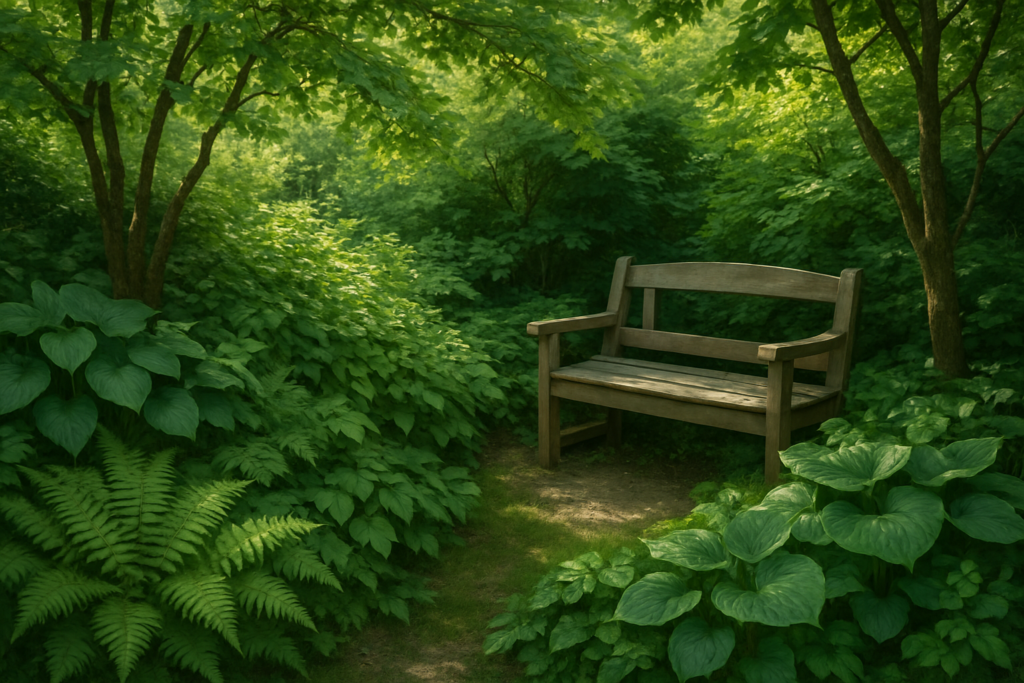
- Clear a small “nest” space: A compact bench, low stool or flat stone tucked among planting invites you to sit, notice and cool down on hot days.
- Create slow paths: A narrow stepping‑stone route winding through ferns and shrubs slows you down and brings you eye‑level with mosses, fungi and ground insects.
- Contrast texture and tone: Shade reads particularly well in layers of greens, bronzes and variegations. Rough bark beside glossy leaves, feathery fronds over broad foliage – this visual richness replaces bright colour.
- Let one area grow a little wild: A “softly managed” patch where leaf litter and fallen twigs simply stay put becomes prime habitat. Mark its edge clearly so it feels intentional, not neglected.
A shady sanctuary is a reminder that not every corner of the garden has to perform for sunlight. Some corners are for rest, for cooling, and for the quieter workings of the biosphere.
Bringing It All Together
When you read shade as microclimate instead of problem, a new kind of design opens up:
- You use trees and tall shrubs as climate allies, not obstacles.
- You swap thirsty lawns and struggling sun plants for deep, layered communities tuned to low light.
- You stabilise soil, hold more water on site, and create refuge for wildlife during heat, drought and storms.
Choose one shady spot this season – a north wall, a tricky corner under a tree, the side alley that never sees noon sun. Map its light and moisture, add a thin organic mulch, and introduce just a handful of shade‑loving companions. As they knit together, you will be building a small but potent piece of climate resilience right where you live.
In a biosphere garden, even the darkest corner can become a green, breathing sanctuary. Shade is not wasted space; it is the cool heart your garden will rely on in the years ahead.