Mulch is one of the quiet heroes of a resilient garden. It keeps soil cool, slows evaporation, feeds soil life and protects roots in heatwaves and heavy rain. But mulch doesn’t have to be something you buy in bags and spread every year. In a biosphere garden, plants themselves can become the mulch.
This is where living mulches and groundcovers come in. By letting low-growing plants knit together across the soil, you can cut your weeding time, buffer your garden against weather extremes, and give wildlife more food and habitat — all at once.
Why Living Mulch Belongs in a Biosphere Garden
Think of living mulch as a green, self-renewing blanket for your soil. Instead of bare ground between plants, you have a layer of low-growing foliage, roots and flowers that work together as a tiny ecosystem.
Living mulches can help your garden biosphere in several ways:
- Soil protection – Groundcovers shield soil from baking sun, heavy rain and wind, which helps prevent erosion and compaction.
- Moisture savings – Shaded soil loses water more slowly, so your beds stay moist for longer between rain or watering.
- More life below ground – Dense, fibrous roots feed fungi, bacteria and soil animals, building structure and fertility over time.
- Weed suppression – Once established, a living mulch fills the space that opportunistic weeds would otherwise occupy.
- Food and shelter for wildlife – Groundcovers can offer nectar, pollen, seeds and hiding places for insects, amphibians, birds and small mammals.
- Temperature buffering – A carpet of plants helps keep soil cooler in summer and a little more stable in winter, protecting roots from extremes.
For a home gardener, this can translate into fewer thirsty, stressed plants, less weeding and watering, and a garden that feels more alive at ground level.
Choosing the Right Groundcover for Your Space
There is no one perfect living mulch. The best groundcovers are the ones that suit your soil, light and style of gardening. A simple way to choose is to think in three categories: weavers, fixers and flowers.
1. The Weavers: Soil-Covering Carpets
Weavers are plants that form a tight mat or network just above the soil surface. Their main job is to cover ground efficiently.
- Site: Good for borders, under shrubs, between stepping stones, and the edges of paths.
- Traits to look for: Spreads gently rather than aggressively, tolerates light foot traffic if near paths, stays low (usually under 15–20 cm).
- Examples of useful habits:
- Low, spreading rosettes that knit together without smothering taller plants.
- Small, quick-to-decompose leaves that feed the soil when they drop.
- Evergreen foliage to keep soil covered over winter, where your climate allows.
When choosing a weaver, match the plant’s preference for sun or shade to the spot. A sun-loving carpet plant will sulk under a dense shrub layer, whereas woodland-type groundcovers will scorch in full sun.
2. The Fixers: Green Manure That Stays
Fixers are living mulches that also help support soil fertility, often by partnering with soil microbes to bring nutrients into circulation.
- Leguminous plants can host nitrogen-fixing bacteria in their root nodules, capturing nitrogen from the air and making it available to the plant and, over time, the wider soil community.
- Deep-rooted species can tap nutrients from deeper layers and gradually cycle them closer to the surface as leaves and roots die back.
Fixers are especially helpful:
- Between rows in veg beds, as an understorey that you occasionally cut back and leave on the surface.
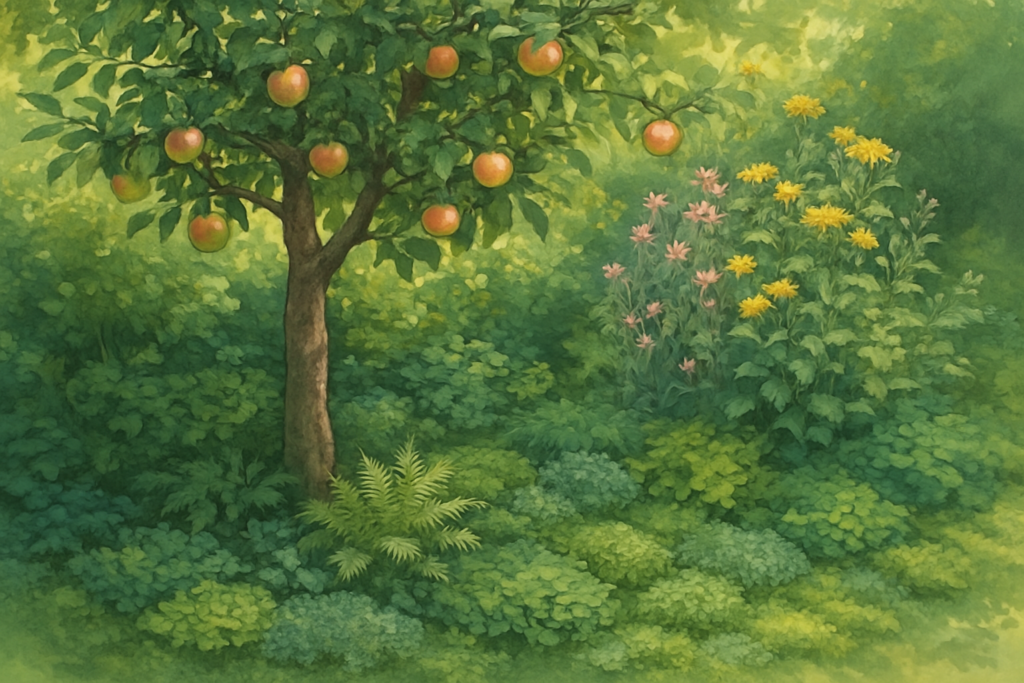
- Under fruit trees and shrubs, where they can act as a living mulch in a small orchard or forest garden corner.
Look for varieties advertised as suitable for underplanting or lawn alternatives if you want something tough enough to walk on occasionally.
3. The Flowers: Low-Growing Biodiversity Boosters
Flowering groundcovers bring pollinator support right down to soil level. They can extend nectar and pollen availability through the year and provide cover for beneficial insects during bad weather.
- Spring-flowering mats help early pollinators when little else is in bloom.
- Long-flowering carpets keep life going between the big floral peaks in your borders.
- Seed-bearing groundcovers can offer food to birds and small mammals in autumn and winter.
For a biosphere garden, favour regional native species or well-behaved non-invasive plants that support your local insects, rather than purely ornamental groundcovers bred only for looks.
Where (and Where Not) to Use Living Mulch
Not every bed needs or wants a living mulch. Used thoughtfully, though, groundcovers can transform the way your garden functions.
Great Places for Living Mulch
- Under fruit trees and shrubs – Replace bare soil or grass with a ring of low plants that suppress weeds and keep the soil soft and moist.
- Along paths – Edge your paths with tough groundcovers that can handle a bit of foot traffic and catch runoff from rain.
- In perennial borders – Weave low growers between taller perennials to fill gaps, shade the soil and give a layered, natural look.
- In containers – Use a small groundcover around the base of a potted shrub or perennial to reduce evaporation, especially on balconies and terraces.
- On slopes – Help hold soil in place on banks that are prone to erosion in heavy rain.
Places to Be Cautious
- Right up against delicate seedlings – Young plants can be outcompeted by enthusiastic groundcovers; give them a clear circle of soil to establish.
- In very dry, nutrient-poor beds – In some cases, adding too many plants can increase competition for limited water. Start small and observe.
- Where you need bare soil for sowing – Leave dedicated strips or patches free for direct sowing veg and annual flowers.
- With strongly spreading species – Avoid pairing vigorous spreaders with slow-growing or rare plants that you don’t want overwhelmed.
Planting and Managing Your Living Mulch
Once you have chosen groundcovers that fit your space, the key is a good start and light, regular guidance rather than constant control.
1. Prepare the Ground (Without Over-Tidying)
You do not need to strip your beds bare to welcome a living mulch. In fact, keeping some organic matter on the surface helps soil life adjust to the new planting.
- Reduce existing weeds – Gently remove tough perennial weeds and cut annual weeds at the base. Leave roots of easy annuals to decompose in place.
- Loosen, don’t flip – If the soil is compacted, lightly loosen the top layer with a fork without turning it over; this protects existing soil structure.
- Add a thin organic layer – A light scatter of compost or leaf mould can help new plants establish, but avoid burying the crowns.
2. Plant More Densely Than You’re Used To
A living mulch only suppresses weeds effectively when it actually covers the ground. Many gardeners plant groundcovers too sparsely, then battle weeds in the gaps.
- Space plants so that when mature, their leaves will just touch or slightly overlap.
- In the first season, expect to do a little hand-weeding while the plants knit together.
- If you’re on a budget, combine purchased plants with divisions and cuttings from friends or other parts of your garden.
3. Guide, Don’t Fight
Once your living mulch has settled in, your role shifts to gentle guidance:
- Trim back from slower plants – A quick snip here and there keeps more vigorous groundcovers from overtaking treasured specimens.
- Chop-and-drop for free mulch – A couple of times a year, cut back fixers and weavers, then leave the clippings on the soil surface as extra mulch and food for soil organisms.
- Lift and share excess – If a groundcover spreads beyond where you want it, lift sections and replant elsewhere or pass them on.
- Observe the microclimate – Notice where groundcovers keep soil noticeably cooler or moister, and use that knowledge when planning new plantings.
Living Mulch as a Climate Resilience Tool
As weather patterns become less predictable, the thin skin of soil in our gardens needs more protection than ever. Living mulches are a simple, low-tech way to build that protection into your planting design.
Instead of constantly adding inputs from outside — water, fertiliser, bought mulch — you design a plant community that does more of the work for you.
By covering the ground with diverse, well-chosen groundcovers, you:
- Slow water loss and keep more rainfall where it lands.
- Buffer temperature extremes at root level.
- Support a richer web of soil life, which in turn helps plants cope with stress.
- Create extra layers of habitat and food for wildlife, right down at your feet.
You don’t need to redesign your whole garden to start. Choose one bed, one path edge or one fruit tree and give it a living mulch understorey this season. Watch how the soil, plants and wildlife respond. Over time, you can extend that green carpet until your garden floor is as alive and climate-smart as the canopy above it.